




I approached Random Video Chat - MatchPub as a social lifestyle app rather than simply another way to pass time. Its purpose is direct: connect with unfamiliar people through one-to-one live video conversations. That can be appealing when you want a spontaneous chat without arranging a call first, but it also means trust and personal boundaries matter just as much as the matching experience.
My overall impression is mixed in a useful way. MatchPub makes the idea of meeting someone online feel immediate, and its free entry removes the biggest barrier to trying it. At the same time, a live conversation with a stranger asks more from the user than a normal messaging app. You have to decide what to show, what to share, when to leave, and whether the person on the other side is making you comfortable. I would recommend it to adults who understand that trade-off, not to anyone looking for a tightly controlled or completely predictable social environment.
What using MatchPub feels like in everyday life
The app comes from webmix and sits in the Lifestyle category. It is free to install, carries a Mature 17+ age rating, and has reached over five million installs. Those details tell me that MatchPub is aimed at a broad adult audience, but the age label should be treated as a practical warning rather than a promise that every interaction will be comfortable or suitable for every mature user.
The central appeal is the lack of ceremony. With ordinary social apps, I usually need to build a profile, exchange messages, wait for a reply, and decide whether a conversation is worth continuing. A live video service shortens that process. You can move from curiosity to an actual face-to-face exchange quickly, which is useful when text feels too slow or impersonal.
A realistic use case would be an evening when I have finished work, want a brief conversation, and do not want to contact friends who may be busy. MatchPub can fill that gap more naturally than scrolling through a feed. The conversation may be interesting, awkward, or very short, but the point is that it starts with human interaction instead of passive browsing.
That same immediacy is also the main source of friction. A stranger can appear before I have decided how much of my surroundings I want visible or how much energy I have for conversation. I would not open the app casually in a bedroom, workplace, or shared home without first checking the camera view and background. A few seconds of preparation can prevent accidental exposure of documents, family details, or anything else I would rather keep private.
The service has a 4.1 average from around 54 thousand ratings, alongside more than two hundred written reviews. I read that as evidence of a generally workable experience with enough variation for the rating to remain imperfect. It is not a reason to assume every match will be good. Random video chat depends heavily on the people available at the moment, so the quality of one session may say little about the next.
Why the live format changes the trust question
In a text-based app, I can pause before answering, remove a message, or stop looking at the screen while I think. Video removes some of that distance. Facial expressions, voice, room details, and timing all become part of the interaction. That can make a friendly conversation warmer, but it can also make pressure feel stronger.
For that reason, I judge MatchPub less by the promise of meeting people and more by how much control I retain during those meetings. A good session is not only one where I find someone interesting. It is one where I can leave without feeling trapped, avoid revealing unnecessary information, and keep the conversation at a level I choose.
There is a useful habit I would adopt before every session: decide in advance what topics are off limits. I would avoid sharing my full name, address, employer, school, personal accounts, daily routine, or travel plans. This is not because every stranger is dangerous; it is because a live conversation can become personal faster than expected. Keeping a simple boundary list makes it easier to respond consistently when someone starts asking for details.
Controls and choices I would check first
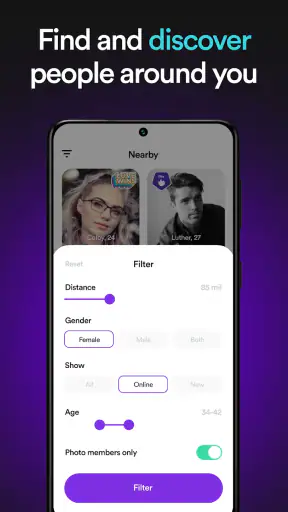
Because MatchPub is built around one-to-one video, the most important controls are the ones that affect participation itself. Before settling into a conversation, I would look for the visible options to end or move on from a match, manage camera and microphone access, and report behavior that crosses a line. I would also pay attention to whether the app clearly indicates when video or audio is active.
I do not treat a permission request as a reason to grant permanent access automatically. On an Android phone running at least Android 9, I would review camera and microphone permissions in the operating system and allow them only when I intend to use the live-chat function. If I later stop using the app, I would revisit those settings rather than leaving access enabled by habit. The same principle applies on iOS: the operating system’s privacy controls should be part of my setup routine.
This is one of the less obvious differences between trying MatchPub thoughtfully and simply tapping through installation screens. The fastest setup is not always the safest setup. I would first open the app in a private place, inspect the available controls, and only then start matching. That workflow gives me a chance to understand the interaction before I am already speaking with someone.
Account control deserves similar attention. If the app offers profile or account settings, I would keep the account as minimal as possible and avoid adding details that are not needed for a conversation. I would also check how to sign out or remove the account before investing time in the service. Knowing how to leave is part of deciding whether I am comfortable joining.
There is a practical trade-off here. A sparse profile may give strangers less context and make some conversations less personal, but it also reduces the amount of information connected to my activity. For this type of app, I would rather begin with less and add only what feels necessary than create a detailed identity that I cannot easily take back.
Where privacy can become complicated
Live video creates data-sensitive moments that are easy to overlook. The obvious issue is the camera, but privacy also includes what appears behind me, what can be heard around me, and what another participant might remember or capture. I cannot control every action of a stranger, so I would choose a neutral background, use headphones when appropriate, and avoid showing anything that identifies my home or routine.
A plain wall is more useful than a carefully decorated room for this purpose. It does not make the conversation better, but it reduces clues about where I live and what belongs to me. I would also silence notifications before starting. A message preview containing a name, delivery update, or private conversation can reveal more than I intended during a video call.
Another realistic situation is using the app while travelling. A hotel room, rental property, or public space can seem anonymous, yet visible signs, landscape, booking documents, or spoken plans may identify where I am. I would avoid live video when I cannot control the background and would never discuss an exact location with a stranger simply because the conversation feels friendly.
In-app purchases add another point worth checking. MatchPub lists purchases ranging from $0.99 to $159.99 per item. I would not treat the free download as the complete financial picture; I would review each purchase prompt carefully, confirm what it unlocks, and use an operating-system purchase password or approval setting. A large maximum item price does not tell me what I will personally spend, but it does make deliberate confirmation important.
My rule would be simple: do not buy anything while distracted by a fast-moving conversation. If a feature is presented as a way to improve matching or extend an interaction, I would pause, read the wording, and decide whether it solves a real problem. Random video chat is easy to use without spending, so I would first understand the free experience before considering an optional purchase.
How much agency the user really has
User agency is strongest when leaving is easy. I would expect to be able to end a conversation immediately if someone becomes insulting, sexual, manipulative, or simply unpleasant. There is no social obligation to explain a departure to a stranger. A short interaction is still a complete interaction, and I would not stay out of politeness.
I would also separate a disappointing match from a safety problem. Someone being quiet or incompatible is not automatically misconduct. On the other hand, requests for private contact details, money, intimate images, or urgent favors deserve a firm refusal and an exit. If reporting tools are available, I would use them for behavior that violates the app’s rules rather than arguing with the person.
One advanced habit that helps is keeping the first conversation deliberately short. Instead of allowing an unknown interaction to run indefinitely, I would treat the opening minutes as a screening period. Is the person respectful? Do they accept a change of topic? Do they react normally when I say I need to leave? Their response to a small boundary often tells me more than an enthusiastic introduction.
I would also avoid moving a conversation to another service too quickly. External messaging can remove the context and controls of the original app, while also exposing a username, phone number, or social profile. Staying inside MatchPub until trust has developed gives me more room to end contact without connecting the person to the rest of my digital life.
Parents should not view the Mature 17+ label as a substitute for conversation and supervision. The app is designed for adults, and the live format can expose users to unpredictable interactions. I would not recommend it for younger teens, and I would be cautious about anyone who is uncomfortable saying no, ending a call, or reporting a problem.
How it compares with familiar alternatives
Compared with messaging apps, MatchPub is more immediate and more socially demanding. Messaging gives me time to inspect a profile, choose my words, and decide whether to reply. MatchPub is better when I want spontaneous conversation and worse when I need time, privacy, or a carefully filtered social circle.
Compared with established social networks, it is less dependent on an existing network of friends or followers. That can make it easier to meet someone outside my usual circles, but it also removes some of the context that makes a person easier to judge. A friend-of-a-friend connection may not be safe by itself, yet it provides more background than a completely random match.
Compared with dating-focused services, the live-chat approach may feel less formal and less profile-heavy. That is useful if I am looking for conversation rather than a structured romantic process. It is not the better choice if I want detailed compatibility filters, a carefully built identity, or a clear relationship-oriented purpose.
Compared with ordinary video-call tools, MatchPub is designed around meeting unfamiliar people rather than calling contacts I already know. That is its defining strength, but also its defining risk. A conventional video app is usually better for planned conversations with trusted people; MatchPub is better suited to spontaneous discovery, provided I accept the uncertainty.
Who should try it and who should skip it
I think MatchPub is a reasonable fit for an adult who enjoys brief conversations, can protect personal information, and is comfortable ending a session without apology. It may also suit someone who finds text-based introductions tiring and wants to judge conversational chemistry more naturally through voice and expression.
I would skip it if I am seeking a calm, heavily moderated environment with predictable topics. I would also avoid it during periods when I feel lonely enough to ignore warning signs. Random interaction can be enjoyable, but loneliness can make a stranger’s attention feel more trustworthy than it really is. In that situation, a call with a known friend or a more structured community would be the better option.
People with limited data plans should think about the practical side of live video before using it regularly. Video can be demanding on connectivity and battery, and an unstable connection can make an already awkward conversation harder. I would try it on Wi-Fi first, keep the phone charged, and avoid using it while walking or doing anything that divides my attention.
The current version is 2.0.4, and the app was released on July 21, 2022. I would keep it updated through the normal app-store process, but I would still review permissions after updates instead of assuming my previous choices remain exactly as intended. Updates can improve an app, yet privacy is easier to manage when I actively check rather than rely on memory.
My cautious verdict
MatchPub succeeds at making live conversations with strangers accessible. I like that the concept is easy to understand and that I can try the basic experience without paying upfront. The app’s strongest quality is immediacy: when I want an unplanned human exchange, it offers a more direct route than scrolling, matching through long profiles, or waiting for messages.
Its weakness is inseparable from that strength. The less preparation a match requires, the more responsibility falls on me. I have to manage the camera, background, personal information, spending choices, and exit decisions. The app can provide the meeting place, but it cannot make every stranger respectful or every conversation worthwhile.
My recommendation is therefore conditional but positive. I would try it with a minimal account, a neutral background, carefully reviewed permissions, and a clear rule that I can leave at any time. I would not pay until I understood exactly what a purchase changes, and I would not move a conversation elsewhere simply because someone seems charming in the first few minutes.
The best way to use MatchPub is as a controlled experiment in spontaneous conversation, not as a substitute for trusted relationships. If that distinction feels comfortable, the free app may be worth exploring. If I want stronger predictability, deeper identity context, or conversations limited to people I already know, another kind of social or video app would serve me better.


